
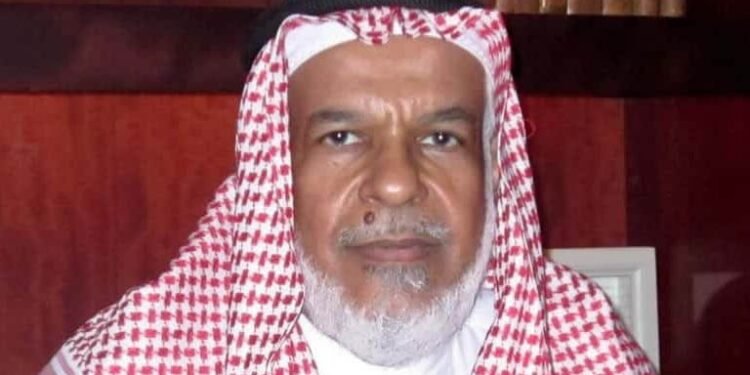
Sheikh Dr Mohamed Ali Elgari is a Saudi economist and Shariah scholar, born in Makkah in 1949, who sits on AAOIFI’s Shari’ah Board and on the Shariah boards of Islamic banks and takaful companies worldwide. A former professor of Islamic economics at King Abdulaziz University in Jeddah, he holds a PhD from the University of California, according to his published biography.
Quick facts: who is Mohamed Ali Elgari?
| Born | 1949, Makkah, Saudi Arabia |
| Education | PhD, University of California |
| Academic roles | Former professor of Islamic economics and former director, Center for Research in Islamic Economics, King Abdulaziz University |
| Standard-setting roles | Member, AAOIFI Shari’ah Board and Board of Trustees |
| Awards | IsDB Prize in Islamic Banking and Finance; KLIFF award for Most Outstanding Contribution; Euromoney Outstanding Contribution to Islamic Finance |
What is his academic background?
Elgari trained as an economist, earning his doctorate in the United States, and spent his academic career at King Abdulaziz University in Jeddah. There he taught Islamic economics and directed the Center for Research in Islamic Economics. He has written books and articles in Arabic and English and served on the editorial boards of several journals of Islamic economics and jurisprudence.
That training as an economist sets him apart from many Shariah scholars, who usually come from a purely legal background. It lets him assess both the fiqh of a contract and its economic effect.
What are his roles in Shariah governance?
- AAOIFI: AAOIFI lists him as Sh. Prof. Dr. Mohamed Ali Elgari, a member of its Shari’ah Board, and he is also a member of its Board of Trustees. See our AAOIFI profile for what the body does.
- Fiqh academies: his biography lists him as an expert at the International Islamic Fiqh Academy of the OIC and the Islamic Fiqh Academy of the Muslim World League.
- Institutions: he chairs or sits on the Shariah supervisory boards of numerous Islamic banks and takaful companies in Saudi Arabia and abroad, including United Arab Bank in the UAE, which publishes his CV.
What issues does he work on?
A recent example shows the kind of question he deals with. AAOIFI’s 2026 Annual Shari’ah Boards Conference programme listed him as a speaker on estimating the actual direct cost of lending. The issue is practical: an Islamic bank may charge a fee to cover the real cost of administering a benevolent loan (qard), but if the fee exceeds that cost it starts to look like interest. Setting a defensible method for measuring the cost is the kind of problem that needs both an economist and a jurist.
What recognition has he received?
His biography lists three major awards: the Islamic Development Bank Prize in Islamic Banking and Finance, the Kuala Lumpur Islamic Finance Forum (KLIFF) award for Most Outstanding Contribution to Islamic Finance, and Euromoney’s award for Outstanding Contribution to Islamic Finance.
How does he compare with other leading scholars?
Elgari belongs to the small group of senior scholars who sit on many of the industry’s most important boards, alongside figures such as Sheikh Nizam Yaquby of Bahrain and Mohd Daud Bakar of Malaysia. His background in academic economics is what distinguishes his profile.
FAQ
He earned his PhD at the University of California.
Yes. AAOIFI lists him as a member of its Shari’ah Board, and he also sits on its Board of Trustees.
At King Abdulaziz University in Jeddah, where he was a professor of Islamic economics and directed its Center for Research in Islamic Economics.