
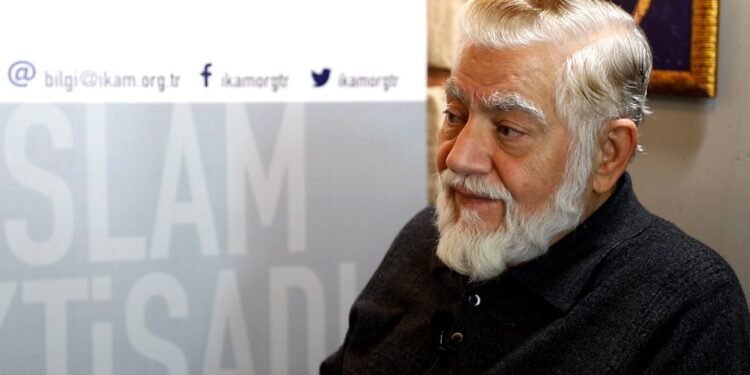
Monzer Kahf is a Syrian-born economist, born in Damascus in 1940, whose work focuses on zakah, waqf and Islamic banking. He earned a PhD in economics from the University of Utah in 1975, headed the research division of the Islamic Development Bank’s Islamic Research and Training Institute, and has written 28 books and booklets, according to his official profile.
Quick facts: who is Monzer Kahf?
| Born | 1940, Damascus, Syria |
| Education | BA in business, University of Damascus (1962); PhD in economics, University of Utah (1975) |
| Professional qualification | Certified public accountant, Syria (1968) |
| Key roles | Director of finance, ISNA (1975 to 1981); head of research, IsDB’s IRTI (1989 to 1991); senior research economist, IRTI (1995 to 1999) |
| Practice | Consultant and trainer in Islamic finance, California, since 1999 |
| Output | 28 books and booklets; more than 100 articles and papers |
What is his background?
Kahf studied business at the University of Damascus, earned a diploma in social and economic planning in 1967 and qualified as a public accountant in Syria in 1968. He then moved to the United States for a doctorate in economics at the University of Utah, completed in 1975. His profile also notes formal training in fiqh and Islamic studies, which gives him both an economist’s and a jurist’s view of finance.
Where has he worked?
From 1975 to 1981 he was director of finance at the Islamic Society of North America (ISNA), handling budgets, fundraising and guidelines on inheritance and endowments. He then joined the Islamic Research and Training Institute (IRTI) of the Islamic Development Bank in Jeddah, heading its research division from 1989 to 1991 and serving as senior research economist from 1995 to 1999. Since 1999 he has run a private consulting and training practice in California, advising on Shariah content in finance agreements, systems for Islamic financial institutions, and Islamic estate planning.
What is he known for?
Kahf is best known for treating zakah and waqf as economic institutions that can be studied and managed with economic tools. His publications include The Calculation of Zakah, Zakah Management in Some Muslim Societies and “Islamic Economics: Notes on Definition and Methodology.” His English books also include The Early Islamic Public Revenues System and Principles of Islamic Financing: A Survey, co-written with Tariqullah Khan. The Islamic Economy: Analytical Study of the Functioning of the Islamic Economic System was translated into Turkish, Indonesian and Korean.
His profile summarises his output as 28 books and booklets in English and Arabic and more than 100 articles, encyclopedia entries and conference papers on Islamic economics, public and private finance, banking, zakah and awqaf.
Where should a new reader start?
- The Calculation of Zakah, for his practical style. Our own zakat calculation guide covers the basics.
- Principles of Islamic Financing, for contract-level concepts.
- His writings on waqf, for how endowments can fund long-term public benefit.
- His essays on the definition and method of Islamic economics.
Why does his work matter?
Most attention in Islamic finance goes to banks and sukuk. Kahf’s work is a reminder that zakah and waqf are also financial institutions, with their own questions of calculation, governance and investment. His North American work on wills, trusts and estate planning has also been practically useful for Muslim families living under Western legal systems.
FAQ
At the University of Damascus and the University of Utah, where he earned his PhD in economics in 1975.
Yes. He headed the research division of the IsDB’s Islamic Research and Training Institute from 1989 to 1991 and later served there as senior research economist.
The Calculation of Zakah, Principles of Islamic Financing and The Islamic Economy.