
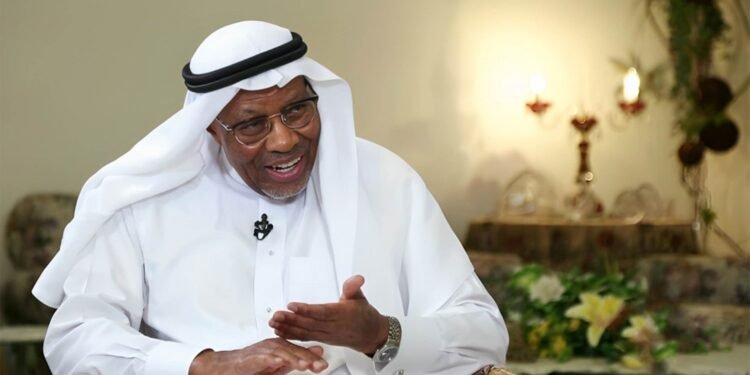
Ahmad Mohamed Ali Al-Madani is the Saudi economist who served as the first president of the Islamic Development Bank (IsDB), from its launch in 1975 until his retirement in 2016. Over four decades he led the bank’s growth into a group of five institutions owned by 57 member countries, and in 2005 he received the King Faisal Prize for Service to Islam for his work in Islamic banking.
Quick facts: who is Ahmad Mohamed Ali?
| Born | 1934, Medina, Saudi Arabia |
| Education | BA in commerce and law degree, Cairo University; MA in public administration, University of Michigan (1962); PhD, State University of New York at Albany (1967) |
| Known for | First President of the Islamic Development Bank, 1975 to 2016 |
| Other roles | Deputy Minister of Education, Saudi Arabia (1972 to 1975); Secretary-General of the Muslim World League (1993 to 1995) |
| Recognition | King Faisal Prize for Service to Islam (2005) |
What did he do before the IsDB?
Born in Medina in 1934, he studied commerce and law at Cairo University before completing graduate degrees in public administration in the United States, a master’s at the University of Michigan in 1962 and a doctorate at the State University of New York at Albany in 1967, according to his Wikipedia biography.
His early career was in education and public administration. He directed the Scientific and Islamic Institute in Aden from 1958 to 1959, served as acting rector of King Abdulaziz University from 1967 to 1972 and was Saudi Arabia’s Deputy Minister of Education from 1972 to 1975.
How did he shape the Islamic Development Bank?
The IsDB was created by finance ministers of the Organisation of the Islamic Conference and began operations on 3 April 1975 in Jeddah. Ahmad Mohamed Ali was elected its first president that year. He led it for more than four decades, an unusually long tenure for the head of a multilateral development bank.
Under his leadership the bank grew from a single lender into the IsDB Group, which today includes four specialised entities alongside the bank itself:
- the Islamic Development Bank Institute (IsDBI), for research and training
- the Islamic Corporation for the Development of the Private Sector (ICD)
- the Islamic Corporation for the Insurance of Investment and Export Credit (ICIEC)
- the International Islamic Trade Finance Corporation (ITFC)
The King Faisal Prize committee credited him with consolidating the conformity of banking transactions with Islamic law, setting an example of modern Islamic banking, strengthening economic ties between Muslim countries and supporting research and training in Islamic economics. The IsDB is also a shareholder and member in many of the industry’s shared bodies, including the Islamic Financial Services Board.
How did his presidency end?
After he announced his retirement, the IsDB Board of Governors, meeting in Jakarta on 18 May 2016, named him President Emeritus and elected Dr Bandar Hajjar as his successor, effective 1 October 2016, the IsDB announced. The Board praised his role in establishing the bank and laying the foundation for its growth.
Alongside his bank work, he served as Secretary-General of the Muslim World League from 1993 to 1995. He has also received Malaysia’s Order of the Defender of the Realm and Kyrgyzstan’s Danaker Order, both in 2007.
Why does his legacy matter?
Much of the Islamic finance infrastructure used today, from trade finance to private sector investment to research, sits inside the group he built. The IsDB Group’s private sector arm, ICD, co-publishes the industry’s main annual dataset, the Islamic Finance Development Report. For readers in Africa and Asia, IsDB financing remains one of the most visible forms of Islamic finance in public infrastructure.
FAQ
Dr Ahmad Mohamed Ali Al-Madani, elected in 1975.
From 1975 until his successor took office on 1 October 2016, a little over 41 years.
Dr Bandar Hajjar, followed in 2021 by Dr Muhammad Al Jasser.
The King Faisal Prize for Service to Islam in 2005, for his achievements in Islamic banking.